Why Phoenix Is the Best Valorant Duelist for Players Who Want to Play Fast and Aggressive
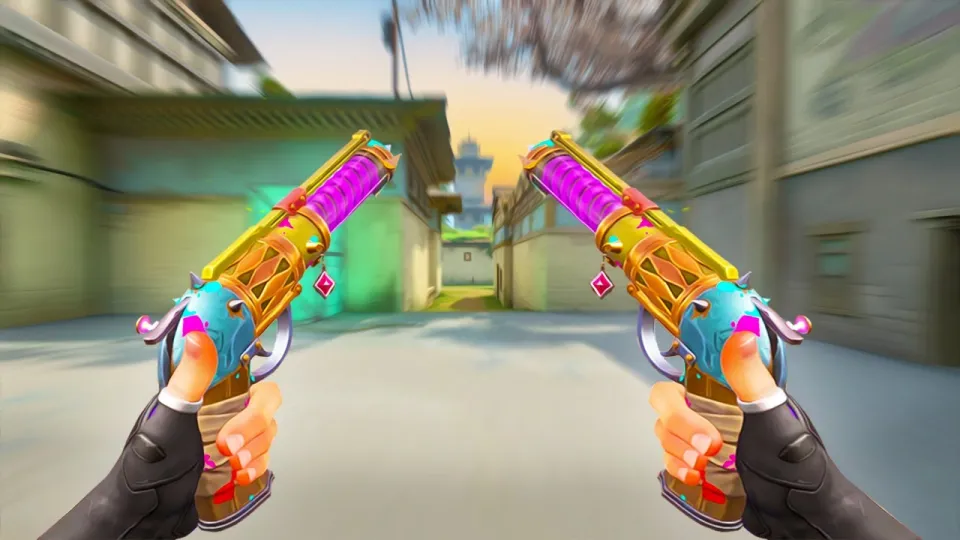
Video: 20 Minutes of Satisfying Valorant Clips
You can order the same kind of articles for your own video to boost it on YouTube and Google. Just message the Telegram bot @sat_sit_bot. The bot writes and publishes the articles itself (with your YouTube video embedded) on popular topical websites (no ads). Try it free: 50 articles on us.
· based on the channel Rawzu
Key takeaways
- Phoenix is a Valorant duelist built for aggression: Blaze blocks vision and deals damage, Curveball blinds around corners, Hot Hands heals and Run it Back refunds a death.
- Rawzu runs 400 DPI at 0.625 in-game sensitivity, a 1440x1080 stretched resolution and crosshair code 1-6-2-2.
- The 20-minute Rawzu clip compilation shows why movement speed and crosshair placement matter more than exotic utility lineups.
- Phoenix's kit rewards fast entries on maps like Lotus and Icebox, where walls and flashes open sites quickly.
- Daily live gameplay from Rawzu is available at https://kick.com/rawzu.
Phoenix is the best Valorant duelist for players who want to take fights first, because his kit solves the two biggest problems of an aggressive entry: getting onto site without dying to crossfire, and surviving the trade that follows. Blaze cuts sightlines and burns anyone who walks through it, Curveball blinds enemies even when they are tucked behind corners, and Run it Back lets you scout, kill and come back if the push goes wrong. If you want to watch that philosophy in motion, the fastest way to see it live is Rawzu's daily Kick streams, where the same aggressive Phoenix play is on display every session.
What Phoenix Actually Does in a Valorant Round
Phoenix is an offensive Valorant agent who specializes in hunting enemies down while crippling their ability to shoot back. His four tools each cover a different part of an entry:
- Blaze creates a wall that blocks vision and deals damage to anyone standing in it, letting Phoenix cross open areas that are normally covered by an Operator or a Vandal.
- Curveball throws a flash that curves around geometry, so it blinds opponents who think a corner or a box is protecting them.
- Hot Hands throws a fireball that damages enemies and heals Phoenix when he stands in the flames, which is what makes him durable enough to keep pushing after a trade.
- Run it Back marks his position, and if he dies during the duration he respawns at the mark with full health, turning a risky entry into a free information-gathering tool.
The combination is why Phoenix mains can play the same way on attack and defense: he is never waiting for someone else to open the map. The trade-off is that all of his value is short-range and timing-based, so a Phoenix who hesitates loses the advantage his kit creates.
Why Aggressive Players Should Pick Phoenix Over Other Duelists
Phoenix is the right pick when your instinct is to take the first fight rather than hold an angle. Other duelists demand setup: Jett needs dash timing and updraft mechanics, Raze needs blast pack movement, Reyna needs a kill before her kit turns on. Phoenix's utility works before the first kill, not after it. Blaze and Curveball are both usable on the entry itself, so a player with strong aim but average ability lineups still gets full value from the agent.
The second reason is survivability. Hot Hands heals Phoenix while he is standing in his own fire, and Run it Back removes the cost of a failed entry. That means you can take the kind of duel most players avoid, learn from the result, and still be alive for the next round. For anyone climbing out of the lower ranks, that combination of forgiveness and pressure is worth more than a flashier ultimate.
Settings, Crosshair and Movement From a Phoenix Specialist
Rawzu's setup is a useful reference point because it is built around fast movement and clean tracking rather than high sensitivity flicks. The published configuration is:
- Sensitivity: 400 DPI with 0.625 in-game sensitivity
- Resolution: 1440x1080 stretched
- Crosshair: 1-6-2-2
- Mouse: Lamzu Maya X
- Mousepad: Zowie H-SR-SE 2 Blue
- Monitor: Zowie XL2566K 360Hz
A 400 DPI and 0.625 combination is a low effective sensitivity, which is standard for players who rely on crosshair placement instead of large mouse swipes. The stretched 1440x1080 resolution widens player models on screen, which helps with the close-range fights Phoenix takes. The crosshair code 1-6-2-2 produces a small static crosshair with a tight gap, the kind that does not cover the head at distance. None of this is mandatory, but copying one variable at a time, starting with sensitivity, is a more reliable way to improve than changing everything at once.
How Phoenix Plays on Lotus and Icebox
Phoenix's kit is strongest on maps where sites have narrow entrances and long sightlines behind them. On Lotus, Blaze can cut the vision from the mid doors and the site entrances while the team pushes through, and Curveball clears the common close angles behind boxes. On Icebox, the vertical geometry makes Curveball especially valuable, because the flash can be thrown to curve over a container and blind a defender holding from an elevated position that a straight-line flash would miss.
The general rule is the same on both maps: use Blaze to split the site, use Curveball to blind whoever is holding the split, and use Hot Hands to heal through the damage you take while crossing. Run it Back should be saved for the round where your team needs information about how many defenders are stacked on a site, not burned early for a single kill.
Common Questions From Players Watching Satisfying Valorant Clips
A clip compilation makes the game look easier than it is, and the comments on this kind of video reflect that gap. Several viewers point out that their own enemies actually shoot back and use game sense, which is the honest difference between a highlight reel and a ranked match. The clips are also cut so that only the successful entries survive the edit; the failed pushes, the missed flashes and the rounds where Run it Back ends in a trade are not in the twenty minutes.
Another recurring theme is movement speed. Viewers regularly note that they cannot keep up with the pace of the entries, and that is a skill in itself: counter-strafing, peeking with intent and clearing angles in a fixed order. Aim matters, but the reason a Phoenix player looks untouchable in a highlight is usually that they arrive at the fight from an angle the defender did not expect. Treat the clips as a demonstration of decision-making, not as proof that the agent carries the round by itself.
Useful Links
- Daily live streams and gameplay: https://kick.com/rawzu
- Original music by Rawzu on Spotify: https://open.spotify.com/artist/6DbATPR1PTNMx7U918bg1Q
- Community Discord: https://discord.gg/axnFwyvxp3
The Verdict on Playing Phoenix in Valorant
Phoenix is the best Valorant duelist for players whose first instinct is to take the fight, because his entire kit works before the first kill instead of depending on it. Blaze and Curveball open space, Hot Hands keeps him alive through the trade, and Run it Back turns a bad entry into free information. The cost is that he has no long-range or vertical mobility, so the agent rewards players who already understand angle clearing and timing. Rawzu's compilation is a good demonstration of that style, and the channel's daily broadcasts on Kick are where the same approach plays out in full, unedited matches rather than twenty minutes of highlights.
Questions & answers
Is Phoenix a good Valorant agent for beginners?
Yes. Phoenix's abilities are simple to understand and forgiving to use: Blaze blocks vision, Curveball blinds, and Run it Back refunds a failed entry. That makes him a strong first duelist for players learning to take fights, because a mistake costs less than it would on Jett or Raze.
What sensitivity and crosshair does Rawzu use in Valorant?
Rawzu plays at 400 DPI with 0.625 in-game sensitivity on a 1440x1080 stretched resolution, using crosshair code 1-6-2-2. The hardware listed is a Lamzu Maya X mouse, a Zowie H-SR-SE 2 Blue mousepad and a Zowie XL2566K 360Hz monitor.
Why do highlight clips make Valorant look easier than ranked?
Clips only include the entries that worked, so the failed pushes and missed flashes are edited out. In a real match, opponents use utility, hold unexpected angles and trade kills, which is why the same aggressive play can look very different in your own games.
How should Phoenix be played on Lotus and Icebox?
On both maps, use Blaze to split the site and block long sightlines, then Curveball to blind defenders holding the entrance. Save Run it Back for rounds where your team needs information about how many enemies are stacked on a site rather than spending it for a single kill.
Source: 20 Minutes of Satisfying Valorant Clips · Markdown version